Type what you hear in your head. The model composes a piano-led piece, then you play it, download it, or sit down at the on-screen keyboard while it works.
A sentence is enough. Name the mood, the tempo, maybe a key, and let the prompt carry the feeling you are after.
The model builds a piano-focused arrangement around your prompt. It may add subtle texture under the keys, so the result feels played, not pasted.
Press play in the site player, save the file, and tap out a melody on the on-screen keyboard while the next idea composes.
No staff paper, no plugins, no session fee. Just a prompt, a player, and a keyboard you can actually touch.

Prompts are steered toward instrumental piano, so what comes back leads with the keys instead of burying them under a full band.
CYM-Prelude sketches a piece up to about 30 seconds on the free tier. CYM-Nocturne stretches to roughly three minutes for a full cue on paid plans.
Sit down at the on-screen piano with your mouse, a touchscreen, or your laptop keys and play while a piece composes in the background.
Every piece exports as a downloadable MP3 audio file that drops straight into your editor, your DAW, or your study playlist.
Score a video or stream and clear it for commercial use on an annual plan or Pay Once pack. Monthly plans cover personal use; the full terms live on the music license page.
Free credits included, no credit card required. Compose a few pieces, hear the difference, and upgrade only when you want longer takes.
Whether you are scoring a chase scene or winding down for sleep, pick the mood and let the prompt do the rest.
Five very different projects, one piano studio that fits each of them.

Challenges
Solution
Generate a piano-led bed you are cleared to use, download it, and run it under your videos with the commercial license on an annual plan. See what is covered on the music license page first.
Challenges
Solution
Spin up a calm piano intro and a soft bed that sits under your voice, then download both and make them your signature across every episode.
Challenges
Solution
Describe the scene, get a cinematic piano cue, and stretch it to about three minutes with CYM-Nocturne. See more cinematic styles for direction.

Challenges
Solution
Generate a gentle, loopable piano piece for menus, maps, and quiet beats, then download it for your build. Browse lo-fi styles for ambient ideas.
Challenges
Solution
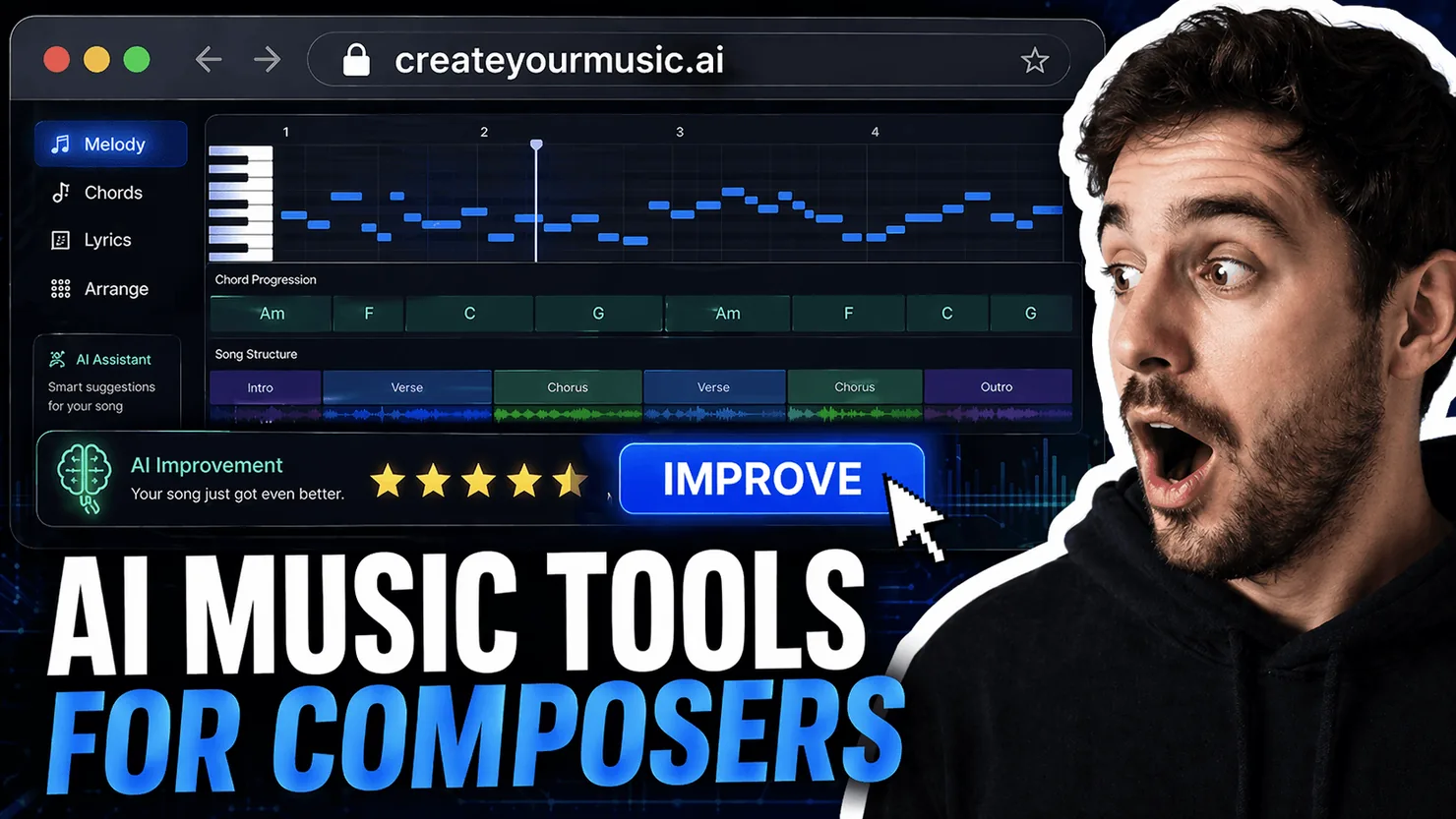
Prompt a piano-led sketch to hear the idea fast, then play along on the on-screen keyboard with your mouse, touch, or laptop keys. No theory required, just your ear.
Steal a starting point, swap a word, and hear it your way. The more specific the prompt, the closer the piano sits to what you imagined.
Slow, reflective solo piano for a quiet morning or a thoughtful montage.
Slow, reflective solo piano in C minor, around 60 BPM, soft sustained chords with a sparse melody, gentle reverb like a rainy window.Use this prompt
Repetitive, low-distraction piano that keeps you in the chair for an hour.
Minimal, repetitive piano in A major at 80 BPM, steady left-hand pattern, light melody, no big dynamic swings, calm and unobtrusive for studying.Use this prompt
A piece that starts intimate at the keys and builds toward an epic finish.
Cinematic piano in D minor starting soft and intimate at 70 BPM, slowly building with rising arpeggios into a dramatic, powerful crescendo.Use this prompt
Warm, slightly dusty piano keys for a chillhop stream or a slow afternoon.
Mellow lo-fi piano in F major at 72 BPM, warm and slightly dusty tone, relaxed swing feel, cozy late-night coffeehouse mood.Use this prompt
A soft, romantic piano theme for a wedding prelude or a heartfelt cue.
Tender romantic solo piano in E major, around 65 BPM, flowing melody over warm rolling chords, intimate and emotional like a first dance.Use this prompt
Bright, bouncy piano with a playful stride for something cheerful and light.
Lively ragtime piano in C major around 110 BPM, bouncy stride left hand, playful syncopated right-hand melody, bright and cheerful.Use this prompt
The honest details on length, licensing, and what the keys actually sound like.
It is an AI piano music generator that turns a text prompt into a piano-led instrumental piece. You describe the mood, tempo, or key you want, and the AI composes a piano-focused track with no vocals and no lyrics. The result plays in the site player and downloads as an audio file you can keep. There is also a playable on-screen keyboard you can play with your mouse, touch, or computer keys while a piece composes, so the page works both as a generator and a little practice pad.
Yes, you can start for free. Free credits are included and no credit card is required, so you can compose a few pieces and hear the quality before deciding anything. The free tier uses the CYM-Prelude model, which produces shorter sketches of about 30 seconds. Move to a paid plan for longer pieces, and choose an annual plan or one-time Pay Once pack when you need a commercial license, since monthly plans cover personal use. See the options on the pricing page to compare what each tier includes.
Commercial use comes with annual plans and one-time Pay Once packs. Monthly plans are for personal use, so if you are publishing a monetized video, a podcast, or an indie game, choose an annual plan or Pay Once pack to get the commercial license. Review the details on the pricing page and read the full terms on the music license page before publishing. We keep the license narrow and honest, so check that it covers your specific use.
Length depends on the model you pick from the dropdown. CYM-Prelude, on the free tier, composes shorter pieces of up to about 30 seconds, which is great for quick sketches, loops, and testing ideas. CYM-Nocturne, on paid plans starting with the Starter tier, stretches to roughly three minutes, enough for a full cue, a study bed, or a wind-down track. Start with the shorter model to explore freely, then switch to the longer one when a piece is worth finishing.
No. You do not need to read notation, play piano, or know any music theory. If you can describe a feeling in plain English, like "slow, sad piano for a rainy scene," the AI handles the composition for you. The on-screen keyboard is there if you want to experiment by ear, but it is entirely optional and never required to make a piece. This piano music generator is built for beginners and busy creators just as much as for trained musicians.
It is piano-led, not guaranteed to be piano alone. The model is a general AI music model steered toward solo piano, so you shape the result with your prompt: keep it piano-focused and the keys stay front and center. It may add subtle texture or light accompaniment under the piano to make a piece feel fuller and more played. If you want it as bare as possible, say so in the prompt, like "solo piano, no other instruments," and regenerate until it lands close to what you hear in your head.
Each piece exports as a downloadable MP3 audio file that plays in the built-in site player. From there you can drop it into a video editor, a DAW, a podcast, a game engine, or a personal study playlist. Streamers use the pieces as background beds, filmmakers use them as cues, and learners use them for practice and inspiration. With an annual plan and the terms on the music license page, you can use eligible pieces commercially in your own published work.
Describe a mood, hear it played on piano, then download it or sit down at the keys. No software to install, no studio, no waiting.
Free credits included, no credit card required